

Professional Advice on Walled Kitchen Gardens
Walled Kitchen Gardens: Restoring a Living Legacy
In the nineteenth century, the walled kitchen garden was the productive heart of the great country estate. Almost every substantial house possessed one: an enclosed, highly organised space devoted to the cultivation of fruit, vegetables, herbs and cut flowers for the family, their guests and the household staff. Far from being secondary to the ornamental grounds, the kitchen garden was essential — a place where horticultural skill, innovation and daily discipline combined to sustain the life of the estate.
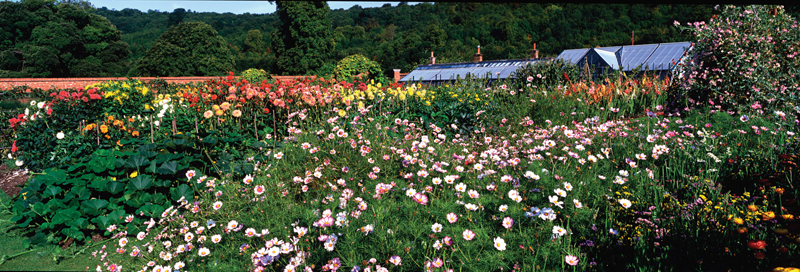
Today, walled kitchen gardens are recognised not only as productive spaces but as important elements of our architectural and horticultural heritage. They represent a remarkable fusion of beauty and utility: formal layouts of geometric beds, axial paths and espaliered fruit trees set within carefully constructed brick or stone walls. The diversity of planting, the craftsmanship of the structures and the quiet elegance of their proportions make them some of the most compelling historic garden spaces in Britain.
Historical Significance and Victorian Productivity
Many of the English walled kitchen gardens that survive today were created or substantially remodelled during the Victorian era. This was a period of horticultural ambition and technical advancement. Heated glasshouses, innovative propagation techniques and improved transport networks allowed estates to grow exotic fruits and extend cropping seasons dramatically. Pineapples, peaches and early grapes were cultivated alongside extensive ranges of vegetables and herbs.
These gardens were often large — frequently an acre or more — and divided into quarters for crop rotation. Walls were built high and thick, absorbing warmth during the day and radiating it at night to create a favourable microclimate. South-facing walls supported trained fruit, while north-facing walls provided cooler conditions for storage or shade-tolerant crops. Every element was carefully considered for productivity.
The Challenges of Restoration
Restoring a period walled kitchen garden is both an inspiring and demanding undertaking. It is rarely a simple matter of repair. More often, it involves careful historical research, sensitive architectural work and thoughtful horticultural interpretation.
One of the first challenges lies in determining which period to restore. Many gardens evolved over decades, reflecting successive owners and changing horticultural fashions. The original design may differ significantly from later Victorian alterations. Establishing an accurate historical narrative requires careful examination of estate records, planting lists, maps, photographs and personal diaries where available.
However, reliable evidence is not always easy to find. Original planting plans may have been lost, and documentary references can be fragmentary. Research through local authority archives, county record offices and historical societies is invaluable. In some cases, engaging a specialist house historian can provide clarity and context, helping to build a coherent understanding of the garden’s development.
Balancing Authenticity with Modern Practicality
Even when historic plans are located, faithfully recreating them can present practical challenges. Fruit and vegetable varieties have evolved significantly over the past century. Some nineteenth-century cultivars are no longer commercially available; others may be unsuitable for contemporary growing conditions or modern culinary preferences.
For this reason, many restorations adopt a balanced approach, combining heritage varieties with modern cultivars that offer improved disease resistance and reliability. The aim is not to create a museum piece, but to revive a productive garden that functions effectively in the twenty-first century while respecting its historical character.
Structural Restoration and Planning Considerations
The restoration of walls, paths, steps and glasshouses often represents the most substantial financial investment. The enclosing wall is the defining feature of the kitchen garden and its repair is critical. Originally constructed to shelter crops from wind, frost and vermin, the wall also creates the microclimate that enables tender fruit to thrive.
Brick and stone matching can be complex. Original materials may no longer be in production, requiring bespoke commissioning to achieve an authentic appearance. Skilled masons are essential to ensure structural stability while maintaining period detail.
Where the garden or associated buildings are listed, consultation with the local planning authority is mandatory before undertaking alterations. Early engagement with conservation officers can prevent costly delays and ensure compliance with heritage regulations.
Glasshouses present another challenge. Many original Victorian structures have deteriorated beyond economic repair. While their restoration in walled kitchen gardens is sometimes possible, it can be prohibitively expensive. High-quality modern glasshouses, designed in traditional style but constructed from durable aluminium, offer a practical and low-maintenance alternative while preserving historic aesthetics.
Replanting and Ongoing Stewardship
Once structural elements have been restored, the true horticultural work begins. A walled kitchen garden demands considerable knowledge and disciplined management. Crop rotation, soil fertility, propagation, pruning of trained fruit and seasonal scheduling require skill and dedication.
The diversity of crops and cultural techniques means that careful study is essential. Learning from experienced gardeners familiar with traditional methods can prove invaluable. A well-managed kitchen garden is a dynamic, evolving system — productive, beautiful and deeply satisfying.
Professional Guidance
With many years’ experience in the restoration and management of walled kitchen gardens, Barry Holdsworth offers expert guidance across every stage of the process — from historical research and planning to structural restoration and planting design.
A restored walled kitchen garden is more than a productive space. It is a revival of living heritage: a place where craftsmanship, horticultural excellence and history converge. When approached with sensitivity and expertise, it can once again become the vibrant heart of an estate — productive, beautiful and enduring.
Barry Holdsworth’s consultancy is operating throughout the South of England – Cornwall, Devon, Dorset, Hampshire, London, Kent, Somerset, Surrey, Sussex, Wiltshire, across the UK and internationally.